 0770899690


 CARE
 MAKEUP & BEAUTY
 PERFUMES
 DISCOUNTS
 COLLECTIONS
 SHOP BY CONCERN
 Skin Problems
 Wrinkles
 Acne
 Pore Problems
 Dark Circles
 Scars and Blemishes
 Sensitive Skin
 Hair Problems
 Hair Breakage





It often starts with enthusiasm: a new scrub, a serum someone saw in a video, washing the face several times a day because of the heat or dust. Then suddenly the usual cream stings, the face feels tight after every wash, and red, flaky patches appear with the first cold snap. Most of the time this is not a new allergy but a skin barrier that needs rest and repair, and ceramides are among the most important tools for that repair.
What is the skin barrier?
The outer layer of the skin is like a brick wall: the cells are the bricks, and between them a mortar of lipids holds them together and fills the gaps. This mortar is made mainly of ceramides, cholesterol and fatty acids, with ceramides forming a large part of it. When the wall is solid, skin keeps its water and keeps irritants and pollutants out. When these lipids run low, tiny invisible cracks appear, water evaporates and irritants easily reach the sensitive layers.
Ceramide moisturisers replace part of these missing lipids and help skin rebuild its wall. On the ingredient list they appear under names such as Ceramide NP, Ceramide AP or Ceramide EOP, and the best formulas pair them with cholesterol and fatty acids, because the barrier needs all three together, not just one. Ceramides are generally gentle and suit adults and children and every skin type.
Signs and causes
Signs of a damaged barrier
- Clear tightness after washing, even with a gentle cleanser.
- Stinging or burning from products that used to feel fine.
- Redness, dry flaky patches and a rough texture.
- Oily shine with a thirsty feeling at the same time, or sudden breakouts.
What harms the barrier
- Over-exfoliating with acids or grains, and combining several strong ingredients.
- Frequent washing with hot water and harsh soap.
- Cold, wind and dry air near the heater.
- Unprotected sun, and fragranced products on irritated skin.
The repair routine step by step
Pause the strong ingredients
Stop scrubs, acids, retinol and strong brightening serums for now. Skin does not need a new treatment right now, it needs rest.
A gentle cleanser and lukewarm water
A cream or gentle cleanser that leaves no tightness, in the evening, and just lukewarm water in the morning if skin is very dry. Pat the face dry without rubbing.

Antiseptic, cleanser, and moisturizer
Price range: 3,500 DA through 4,250 DA
Discover the product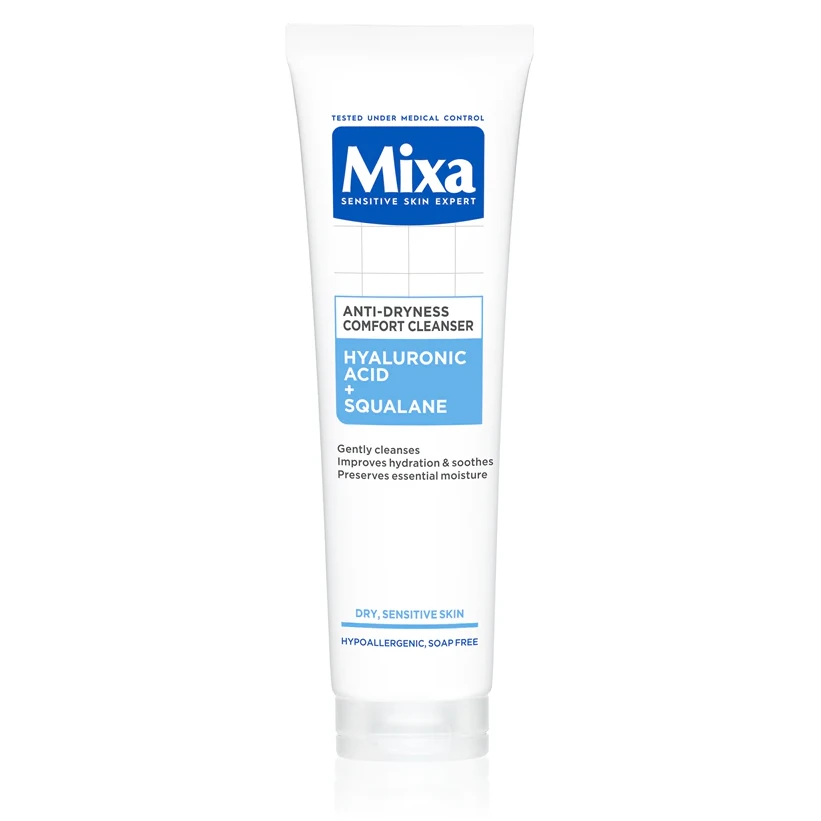
A soothing serum if needed
A simple serum that supports the barrier and hydrates can go before the cream, as long as it has no fragrance or acids.

A ceramide moisturiser
This is the key step. Choose a moisturiser that pairs ceramides with ingredients such as cholesterol, natural moisturising factors or glycerin, and apply it morning and evening on slightly damp skin.

Sunscreen every morning
A damaged barrier is more sensitive to sun. A day moisturiser with SPF 30 or higher saves a step in the morning; reapply it when you stay outside for long.

A richer layer at night
On very dry or cracked patches, apply a thin layer of a rich repair cream over your moisturiser at night, to protect the skin through the hours of sleep.

Cicaplast Palm B5+ Soothing Cream for Rapid Restoration
Price range: 3,350 DA through 4,350 DA
Discover the productIf redness or burning lasts more than two weeks despite a gentle routine, if patches ooze or swell, with strong itching, or with lasting redness on the cheeks and nose, see a dermatologist. The cause may be an allergy to a specific ingredient or a condition such as eczema or rosacea that needs diagnosis and treatment.
When do actives come back?
When the burning and tightness are gone and your usual moisturiser feels comfortable again, often after a few weeks, you can bring actives back one at a time. Start with a single active only twice a week, always follow it with your ceramide moisturiser, and wait two weeks before adding another. Do not combine retinol with exfoliating acids on the same night, and keep vitamin C for the morning and acids for the evening.
Do not forget the body: legs and hands suffer from the same damaged barrier in winter, and a ceramide moisturiser applied within minutes of a lukewarm shower is enough for them.


Cicalfate+ Protective Repair Cream
Price range: 3,250 DA through 4,450 DA
Discover the productFrequently asked questions
Do ceramides suit oily skin?
Yes, oily skin can have a damaged barrier too, especially with breakout treatments. Choose a light ceramide lotion or gel cream instead of a heavy cream.
Is olive oil or another natural oil enough?
Oils coat the skin and reduce water loss, but on their own they do not replace the lipid mix the barrier needs, and some can irritate sensitive skin. A simple, balanced moisturiser is better during repair.
Can they be used with acne treatments?
Yes, and they even help skin tolerate these treatments. If the treatment is on prescription, ask your doctor which moisturiser to use and in what order.
Do we need many products to repair the barrier?
No, quite the opposite. A gentle cleanser, a ceramide moisturiser and sunscreen are enough in most cases, and every extra product during this period is one more chance of irritation.
How long does the barrier take to recover?
Many people feel more comfortable within days, but full recovery usually takes a few weeks of a steady, gentle routine, without going back to scrubs too early.